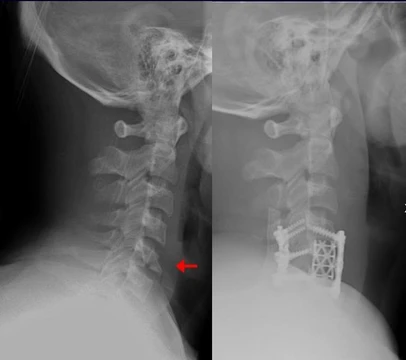
Scoliosis
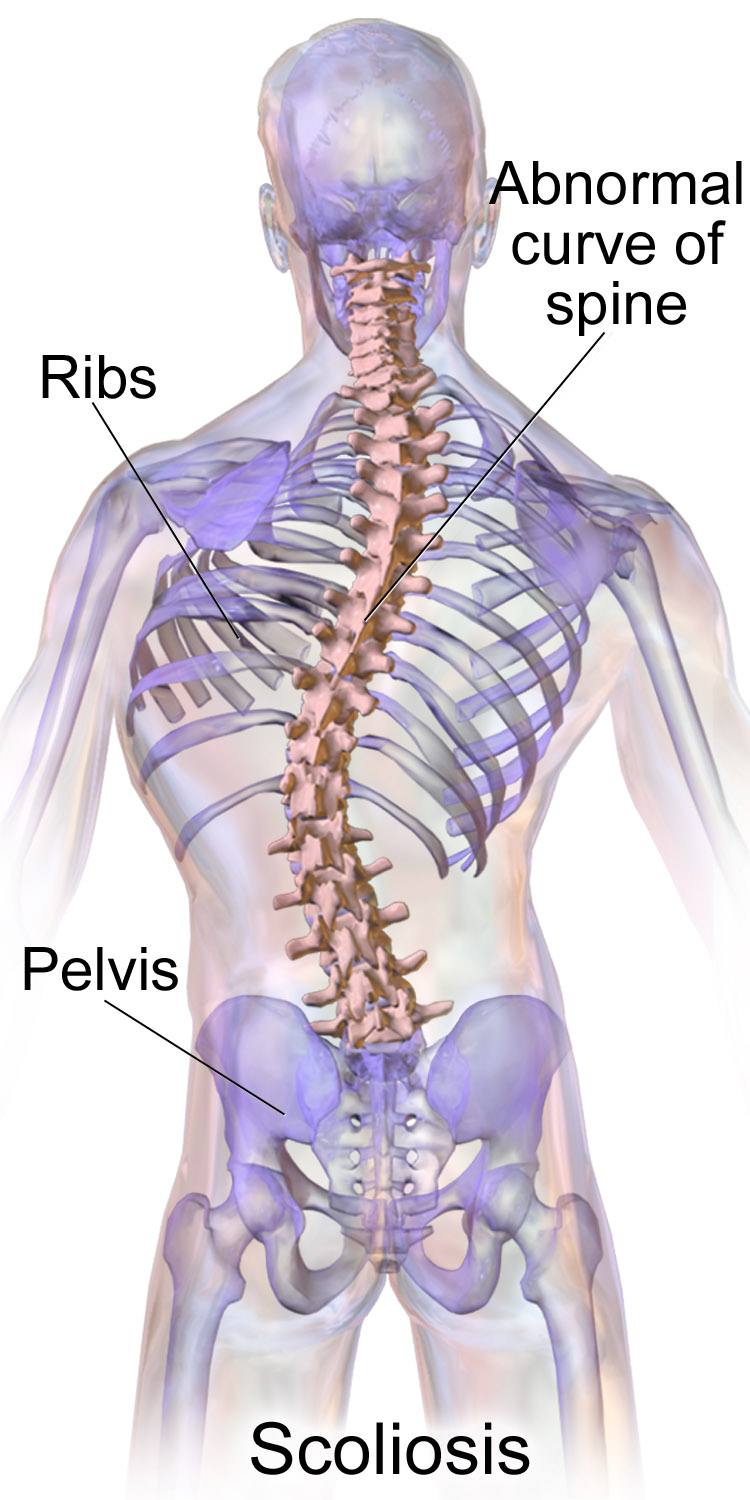
A spinal condition with irregular curvature, often of unknown cause.

Hwhwh27 · CC BY-SA 4.0
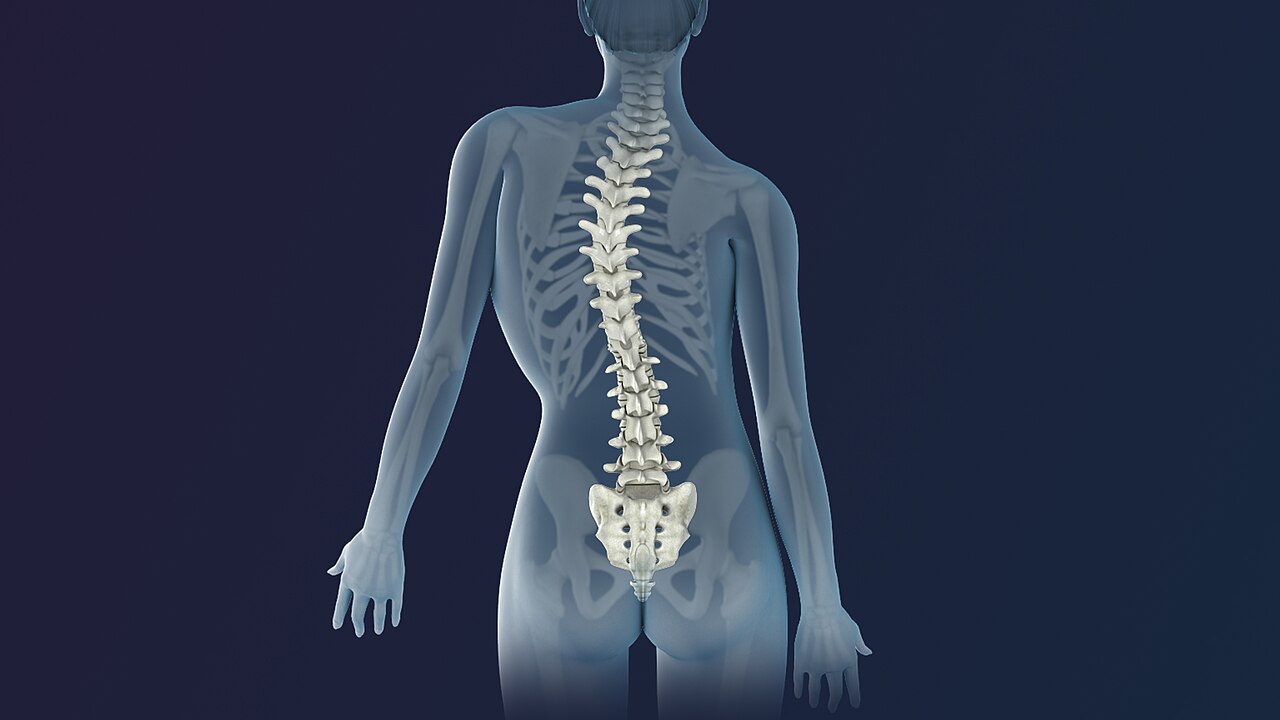
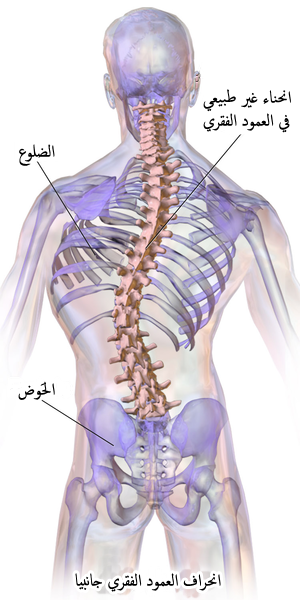
Scoliosis is a medical condition in which the spine has an irregular curve in the coronal plane, associated with a rotational component. The curve is usually S- or C-shaped over three dimensions. It can be compared to kyphosis and lordosis, other abnormal curvatures of the spine which are in the sagittal plane rather than the coronal. Scoliosis occurs in about 3% of people, most commonly developing between the ages of ten and twenty, and females are typically more severely affected than males with a ratio of 4:1.
- prevalence
- About 3% of people
- common age of onset
- Between ten and twenty years
- sex ratio
- Females more severely affected, ratio 4:1
- cause
- 65% idiopathic, 15% congenital, 10% secondary to neuromuscular disease
- genetic contribution
- 38% of variance in risk due to genetic factors
- environmental contribution
- 62% of variance in risk due to environment
- classification
- Structural (fixed curve) or functional (normal underlying spine)
Lore & Background
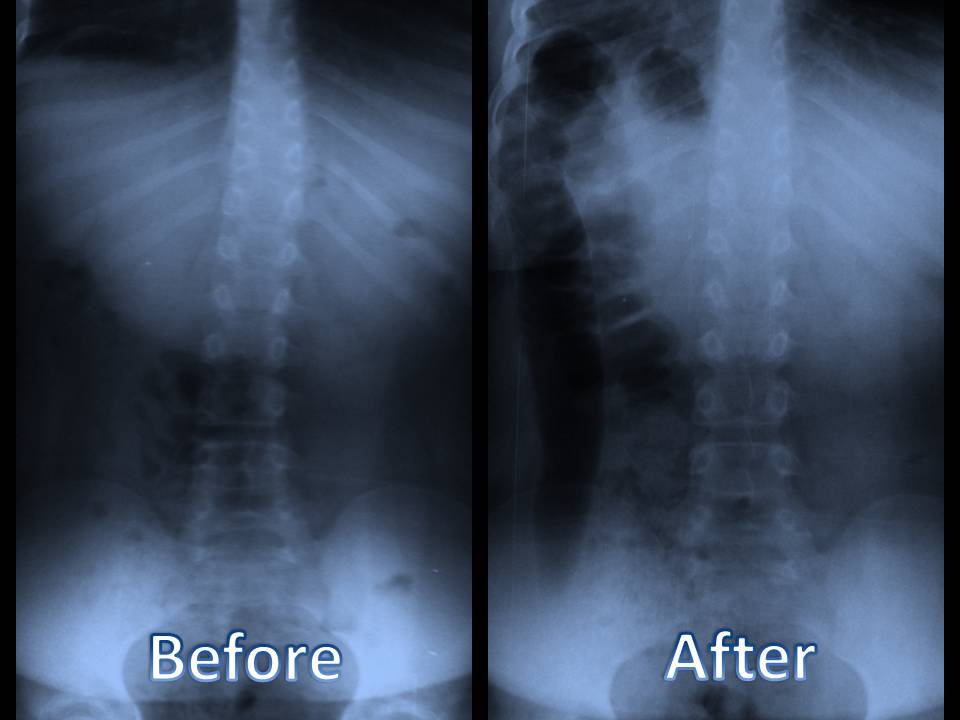
Scoliosis is a condition in which the spine curves abnormally in the coronal plane, often with a rotational component, forming an S- or C-shape. The cause of most cases is unknown, but it is believed to involve a combination of genetic and environmental factors. It most often occurs during growth spurts right before puberty. Risk factors include other affected family members. It can also occur due to another condition such as muscle spasms, cerebral palsy, Marfan syndrome, and tumors such as neurofibromatosis. Diagnosis is confirmed with X-rays. Scoliosis is typically classified as either structural, in which the curve is fixed, or functional, in which the underlying spine is normal.
Reader's Guide
Scoliosis is a significant medical condition affecting about 3% of people, with most cases developing between ages ten and twenty. While mild scoliosis does not typically cause problems, more severe cases can affect breathing and movement, and pain is usually present in adults and can worsen with age. The condition may affect a person's quality of life and, in some cases, may be considered a disability. Treatment depends on the degree of curve, location, cause, and age of the patient, as some treatments are ineffective in adults who are no longer growing. Options include bracing, specific exercises, posture checking, and surgery. Evidence that chiropractic manipulation, dietary supplements, or exercises can prevent worsening is weak, though exercise is still recommended for its other health benefits. Longitudinal studies have revealed that the most common form, late-onset idiopathic scoliosis, causes little physical impairment other than back pain and cosmetic concerns, even when untreated, with mortality rates similar to the general population.
Did You Know?
- The term 'scoliosis' is from Ancient Greek σκολίωσις (skolíōsis) meaning 'a bending'.
- An estimated 65% of scoliosis cases are idiopathic (cause unknown).
- Left-right asymmetries of the vertebrae and their musculature, especially in the thoracic region, may cause mechanical instability of the spinal column.
- About 38% of variance in scoliosis risk is due to genetic factors, and 62% is due to the environment.
Anatomy of the Curve: What Scoliosis Actually Looks Like
Scoliosis describes a sideways deviation of the spine within the coronal plane, always accompanied by a rotational element that gives the condition its three-dimensional character. The resulting shape is typically either an S or a C, and unlike kyphosis or lordosis—which involve abnormal curves in the front-to-back sagittal plane—scoliosis is fundamentally a left-right problem. In some individuals the curve holds steady for life, while in others it gradually deepens. Mild deviations rarely cause trouble, but as the angle increases, breathing and mobility can be compromised, and adults commonly report pain that tends to intensify with age. Visible signs include one shoulder blade jutting more than the other, a rib hump on one side, uneven muscle bulk along the spine, and a generally lopsided posture. Beyond the cosmetic asymmetry, sufferers may experience back pain that shoots down the legs, chest discomfort where misaligned ribs press against the sternum, constipation from abdominal tightening, and in the most advanced cases, genuine heart and lung impairment.
Where It Comes From: Genetics, Development, and Mystery
Roughly two-thirds of scoliosis cases are idiopathic, meaning no single trigger has been identified. The remaining cases split between congenital malformations—where vertebrae fail to form or segment properly during the third through sixth week of fetal development—and secondary forms linked to neuromuscular conditions such as cerebral palsy, Marfan syndrome, or tumors like neurofibromatosis. The genetic contribution is real but tangled: about 38 percent of the variance in risk traces back to hereditary factors, yet inheritance patterns are inconsistent and even identical twins can differ. Research has pointed toward genes involved in bone formation, bone metabolism, and connective-tissue architecture, including the MATN1 gene and a cluster of fifty-three single-nucleotide markers flagged in genome-wide studies. Environment accounts for the larger 62 percent share, and having an affected family member raises one's odds. The condition most frequently surfaces during the pre-pubertal growth spurt, and females are roughly four times more likely than males to develop a severe curve.
Managing the Curve: From Observation to the Operating Room
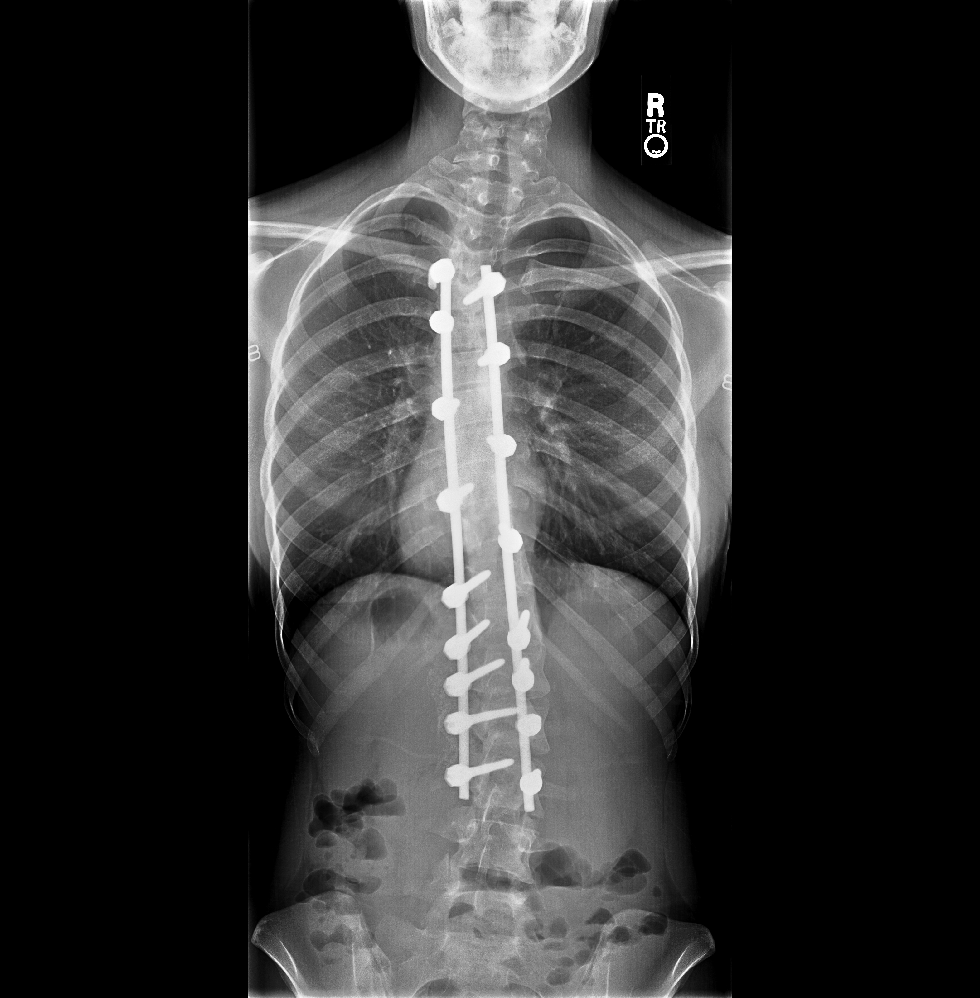
How a person is treated hinges on three variables: how large the curve is, where it sits along the spine, and what caused it. Age matters enormously because once skeletal growth has finished, certain interventions simply stop working. A small, stable curve may warrant nothing more than periodic check-ups. For growing adolescents with a moderate angle, a custom-fitted brace worn every day until growth ceases is the standard approach, often paired with core-strengthening exercises and regular posture assessments to reduce the chance of further progression. When the deformity is severe, posterior spinal fusion surgery can straighten the spine, and most patients resume physical activity within about six months, though a low level of residual back pain is still anticipated in the most extreme cases. Importantly, the evidence behind chiropractic manipulation, dietary supplements, or specialized exercise programs as preventive measures remains weak, even though general exercise is still encouraged for its broader health benefits. Among adolescents whose Cobb angle sits below twenty degrees, only about ten to twenty percent will see meaningful worsening.
Living With It: Prevalence, Outlook, and Correcting the Record
Scoliosis touches roughly three percent of the population, with the highest incidence between the ages of ten and twenty. The word itself comes from the Ancient Greek skolíōsis, meaning simply a bending, a nod to the condition's visible hallmark. For the vast majority of people—especially those whose curve is mild or moderate—life goes on with little more than occasional back discomfort and a cosmetic asymmetry. Longitudinal research has put to rest an older, widely held fear: that an untreated idiopathic curve would inevitably march toward severe cardiopulmonary disability in old age. In reality, mortality rates for people with late-onset idiopathic scoliosis track closely with those of the general population. Once skeletal maturity is reached, the likelihood of further worsening drops significantly. It is only in the most extreme presentations that lung capacity diminishes, the heart feels mechanical pressure, and physical activity becomes genuinely restricted. In those rare scenarios the condition may be classified as a disability, but for most sufferers it remains a manageable, if sometimes annoying, part of everyday life.
Gallery

Frequently Asked Questions
What is Scoliosis?
Scoliosis is a three-dimensional spinal deformity in which the vertebral column curves laterally within the coronal plane while simultaneously rotating, producing a characteristic S- or C-shaped profile. It is distinct from kyphosis and lordosis, which involve abnormal curves in the sagittal plane instead.
How common is Scoliosis and when does it typically appear?
Roughly three percent of the general population will develop a measurable scoliotic curve at some point in life. The condition most frequently manifests during the adolescent growth spurt, between the ages of ten and twenty.
Why does Scoliosis hit females harder than males?
Although the condition can affect anyone, girls and women experience significantly more severe curves than their male counterparts, with a roughly four-to-one ratio in clinical severity. The exact biological mechanism behind this sex disparity remains an active area of research.
What causes Scoliosis?
In about 65 percent of cases the origin is idiopathic, meaning no single identifiable trigger can be found. The remaining cases split between congenital malformations of the vertebrae (around 15 percent) and secondary effects of neuromuscular disease (roughly 10 percent).
How much of Scoliosis risk is genetic versus environmental?
Current heritability estimates place approximately 38 percent of the variance in scoliosis susceptibility on the genetic side, with the remaining 62 percent attributed to environmental and developmental factors. This suggests that while inherited predisposition plays a meaningful role, non-genetic influences carry the larger share of the risk equation.
More in Musculoskeletal System And Orthopedics 1-17
Spotted an error? Know more?
This is a living reference — every entry is fact-audited, and reader corrections feed straight into our audit queue. Suggest an edit · See this site's audit record