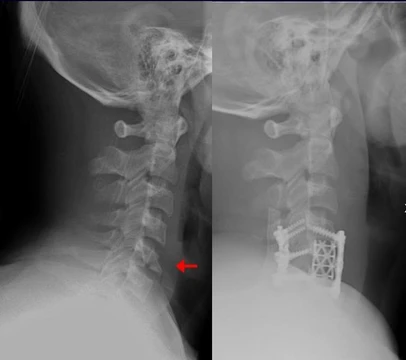
Polytrauma
Medical condition of multiple traumatic injuries, often from combat or crashes.

Polytrauma, also known as multiple trauma, is a medical condition describing a person who has sustained multiple traumatic injuries, such as a serious head injury combined with a serious burn. The term is defined by an Injury Severity Score (ISS) equal to or greater than 16 and has been in use for a long time for any case involving multiple trauma. It has become a commonly applied term by US military physicians in describing seriously injured soldiers returning from Operation Iraqi Freedom and Operation Enduring Freedom.
- field
- Medicine
- definition
- Injury Severity Score (ISS) ≥ 16
- common_cause_civilian
- Motor vehicle crashes
- common_cause_military
- Blast injuries from improvised explosive devices
- associated_condition
- Traumatic brain injury (present in 60% of blast-injured)
- us_rehab_centers_as_of_2013
- 5
Lore & Background
In civilian medicine, polytrauma is frequently associated with high-velocity motor vehicle crashes. Upon hospital admission, patients typically undergo x-ray diagnosis of the cervical spine, chest, and pelvis—known as a 'trauma series'—to identify life-threatening injuries. Extracorporeal membrane oxygenation (ECMO) may be effective in treating some polytrauma patients with pulmonary or cardiopulmonary failure. In military medicine, polytrauma often results from blast injuries caused by improvised explosive devices or rocket-propelled grenades. The combination of high-pressure waves, explosive fragments, and falling debris can produce brain injury, loss of limbs, burns, fractures, blindness, and hearing loss. The high incidence of polytrauma in modern military medicine is considered a sign of medical advancement, as in previous wars most soldiers with such injuries did not survive. As of 2013, the United States Department of Veterans Affairs managed five rehabilitation centers specializing in polytrauma, located in Minneapolis, Palo Alto, Richmond, San Antonio, and Tampa. The VHA developed a screening and evaluation process for OEF/OIF/OND veterans, including mandatory screening for deployment-related traumatic brain injury.
Reader's Guide
Polytrauma represents a significant medical and public health challenge, particularly for military personnel returning from conflicts in Iraq and Afghanistan. Its definition via an Injury Severity Score of 16 or greater provides a standardized clinical threshold. The condition's prevalence among OEF/OIF/OND veterans—with studies showing rates from 6% to 42.1% in various samples—underscores its importance. The Department of Veterans Affairs has established a network of specialized rehabilitation centers and screening protocols, reflecting the long-term, resource-intensive care required: approximately 2.8 full-time equivalent staff per patient for months, sometimes for life. The condition also highlights medical progress, as many polytrauma victims now survive injuries that would have been fatal in earlier wars, though they often face permanent physical limitations and psychological complications such as PTSD.
Did You Know?
- Polytrauma is defined by an Injury Severity Score (ISS) equal to or greater than 16.
- In civilian life, polytrauma is often associated with high-velocity motor vehicle crashes.
- 60 percent of those injured by blasts have some degree of traumatic brain injury.
- As of 2013, there were five VA rehabilitation centers in the U.S. specializing in polytrauma.
Frequently Asked Questions
What exactly is Polytrauma in orthopedic medicine?
Polytrauma is the clinical label for a patient who has suffered several severe traumatic injuries at the same time—for example, a major head wound paired with extensive burns. It is not a single diagnosis but a descriptor of the overall injury burden.
How do clinicians decide whether a case qualifies as Polytrauma?
The standard threshold is an Injury Severity Score of 16 or higher, which means the combined severity of the individual injuries crosses that numeric line. Once that cutoff is met, the patient is classified as polytrauma regardless of how many distinct wounds are present.
What are the most common real-world causes of Polytrauma?
In civilian settings, motor-vehicle crashes are the leading mechanism, while in military contexts blast injuries from improvised explosive devices account for the majority of cases. Both scenarios tend to produce the multi-system damage that defines the condition.
How does Polytrauma relate to traumatic brain injury?
TBI is a frequent companion to polytrauma, especially after blast events, where roughly 60 percent of injured soldiers also sustain a brain injury. This overlap makes neuro-rehabilitation a critical part of polytrauma care.
Where do Polytrauma patients receive specialized long-term rehabilitation in the U.S.?
As of 2013, only five dedicated polytrauma rehabilitation centers operated across the United States, all originally established to serve veterans returning from Operation Iraqi Freedom and Operation Enduring Freedom. Their limited number highlights how resource-intensive comprehensive polytrauma recovery is.
More in Musculoskeletal System And Orthopedics 1-17
Spotted an error? Know more?
This is a living reference — every entry is fact-audited, and reader corrections feed straight into our audit queue. Suggest an edit · See this site's audit record